
What Is Ceramic Coating?
Ceramic coating is a liquid polymer applied to a vehicle's exterior, creating a protective layer that enhances both durability and appearance. This coating forms a chemical bond with the car's factory paint, resulting in a surface that repels water and dirt and offers greater protection against environmental contaminants. This technology has gained popularity among Florida drivers eager to maintain their vehicles' pristine looks despite the region's challenging climate.
How Does Ceramic Coating Work?
Chemical Bonding Explained
Ceramic coatings operate through a process known as chemical bonding. When applied, the coating undergoes chemical reactions that allow it to form a strong bond with the paint surface. Unlike traditional waxes or sealants, which merely sit on top of the paint, ceramic coatings penetrate and adhere at a molecular level, resulting in a highly resilient protective layer.
The Role of Silicon Dioxide (SiO2)
The primary component of most ceramic coatings is silicon dioxide (SiO2), which is also found in glass. SiO2 gives the coating a remarkably hard surface that creates a hydrophobic effect, causing water to bead and roll off the surface. This means contaminants like dirt, road grime, and bird droppings are less likely to stick, making cleaning easier and less frequent.
Comparison of Coated vs. Uncoated Paint
Visual Effects Under Florida Sun
A key benefit of ceramic coating, especially for Florida drivers, is its protection against intense UV rays. A coated vehicle maintains a glossy finish and vibrant color, resisting fading and oxidation that often affect uncoated cars in sunny climates.
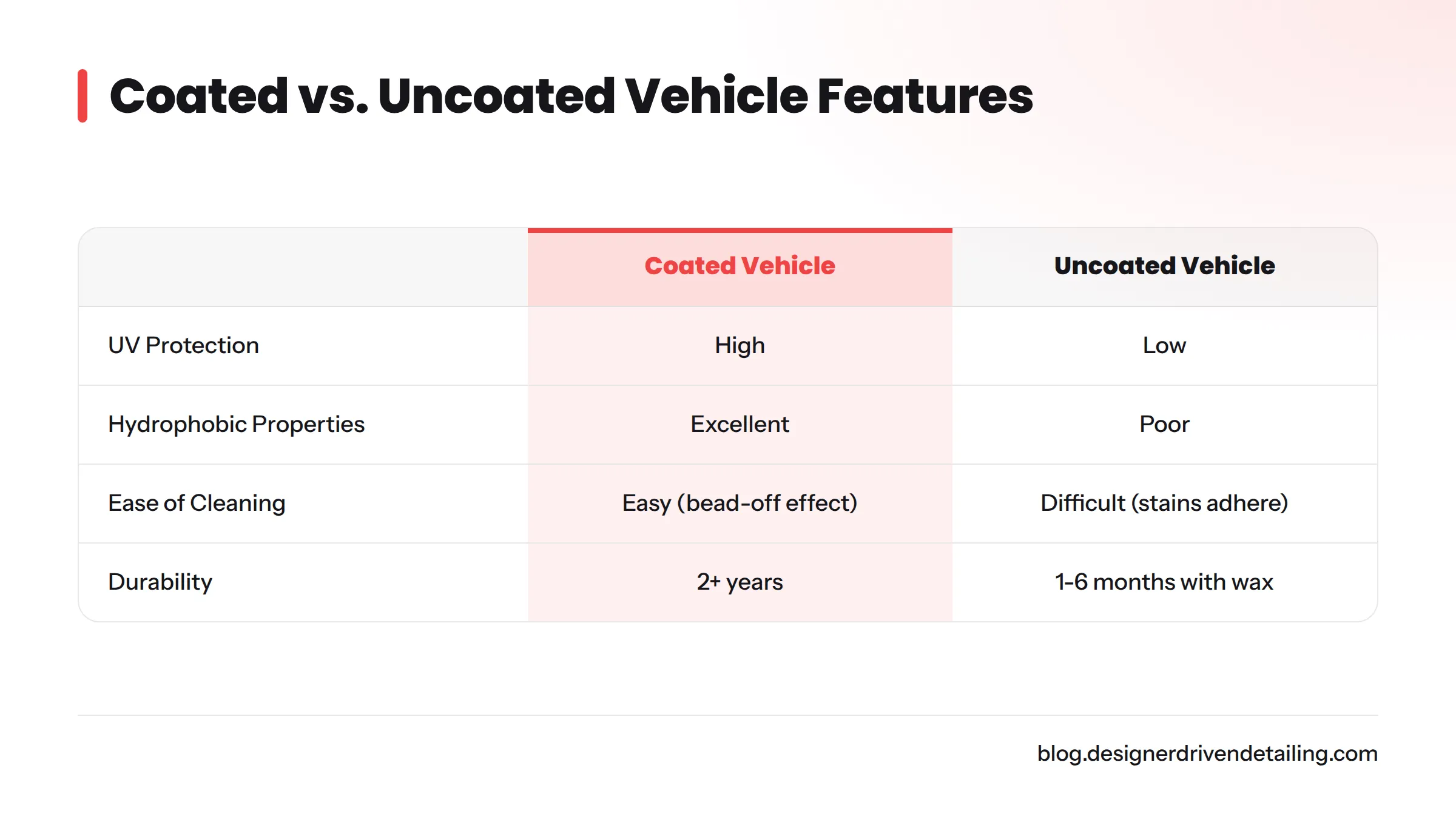
| Feature | Coated Vehicle | Uncoated Vehicle |
|---|---|---|
| UV Protection | High | Low |
| Hydrophobic Properties | Excellent | Poor |
| Ease of Cleaning | Easy (bead-off effect) | Difficult (stains adhere) |
| Durability | 2+ years | 1-6 months with wax |
Common Misconceptions About Ceramic Coating
Several misconceptions persist about ceramic coatings, leading to misunderstandings regarding their benefits. A common belief is that ceramic coatings are a "set it and forget it" solution. While they offer excellent protection, they still require care and maintenance for lasting effectiveness. Additionally, some people mistakenly believe that ceramic coatings provide a guarantee against all damage. Although they significantly enhance protection, they do not make a vehicle impervious to harm.
Maintenance Tips After Application
To ensure your ceramic coating performs optimally, consider these maintenance tips tailored for the challenging Florida climate:
- Regular Washing: Use a pH-neutral car shampoo designed to safely remove dirt without degrading the coating.
- Avoid Automatic Car Washes: These frequently use harsh chemicals and abrasive brushes that could damage the coating.
- Inspect Regularly: Look for signs of wear or damage, and consult a professional for necessary maintenance or re-application.
Watch this video for more details:
Frequently Asked Questions
What is the lifespan of ceramic coating?
Ceramic coatings generally last between two to five years, depending on the product used and how well it is maintained.
What maintenance is required for ceramic coatings?
Regular washing with suitable products and periodic inspections will help maintain the coating's effectiveness.
How does ceramic coating protect against UV rays?
The chemical structure, combined with SiO2, forms a barrier that reflects harmful UV light, preventing oxidation and fading.
Is ceramic coating worth the cost?
Many find that the long-term benefits, such as reduced maintenance and improved appearance, justify the investment.
Can ceramic coatings be applied to all vehicles?
Yes, ceramic coatings can be applied to most vehicles, but proper surface preparation is essential for optimal adhesion.
Understanding ceramic coating is vital for Florida drivers. With the right application and ongoing maintenance, it can significantly enhance the longevity and aesthetic of your vehicle while offering effective protection against the unique environmental challenges faced in Florida.