
What is Paint Correction?
Paint correction involves removing imperfections from a vehicle's paint surface to restore its original clarity and finish. This process effectively addresses common issues such as swirl marks, scratches, and oxidation, which arise over time due to environmental factors and improper care.
Defining Paint Correction
At its core, paint correction is a meticulous polishing process where upper layers of paint are carefully removed to eliminate defects. The goal is to achieve a high-gloss finish while preserving the integrity of the underlying paint. For a more detailed understanding, check out this video guide, which serves as an excellent starting point.
Common Paint Defects Addressed by Paint Correction
Recognizing the types of paint imperfections is essential for determining when paint correction is needed. Here are some common defects:
- Swirl Marks: Circular scratches often caused by improper washing techniques.
- Water Spots: Mineral deposits from water that etch into the paint finish.
- Oxidation: Dullness brought on by UV exposure.
- Scratches: Resulting from careless washing or contact with hard surfaces.
Each defect not only impacts the car's aesthetics but can also lead to more significant paint issues if left untreated.
The Process of Paint Correction
Step-by-Step Overview
- Assessment: Inspect the vehicle to identify specific defects.
- Preparation: Thoroughly wash and decontaminate the paint surface. Products for water spot removal can be notably effective.
- Correction: Use a polishing machine with various grades of compounds to gradually eliminate imperfections.
- Refinement: Finish with finer pads and polish to enhance gloss.
- Protection: Apply a protective coating, such as wax or sealant, for durability.
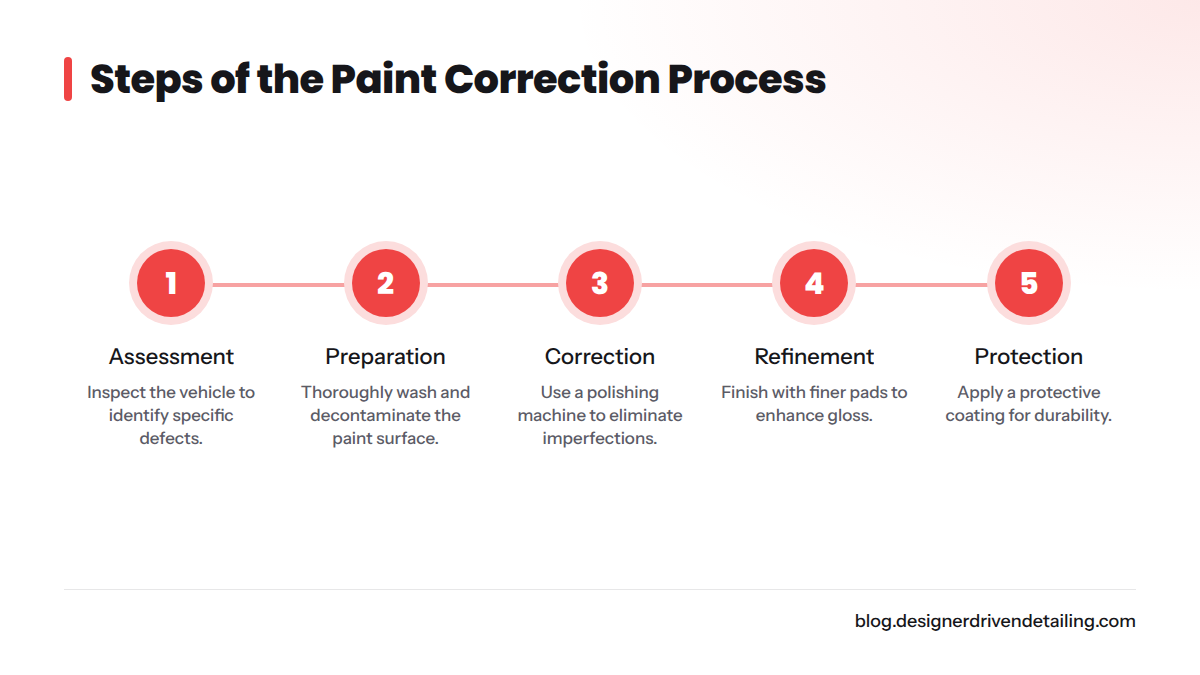
This systematic approach ensures effective results while maintaining paint integrity.
Benefits of Professional Paint Correction
Opting for professional paint correction comes with numerous advantages:
- Improved Aesthetics: Restores the vehicle to a like-new condition.
- Increased Value: A well-maintained finish can elevate resale value.
- Extended Lifespan: Proper care reduces further paint degradation, preserving the vehicle.
- Boosts Pride of Ownership: A well-kept vehicle enhances your driving experience.
When to Consider Paint Correction
Identifying the right moment for paint correction can save you time and money in the long run. Look for the following indicators:
- Dull or faded paint surface
- Observable scratches or swirl marks
- Persistent water spots that regular washing cannot remove
- Signs of oxidation or color dullness
Possible Timing Scenarios
- After Severe Weather Exposure: If your vehicle has faced harsh conditions, paint correction can help restore its luster.
- Before a Sale: Enhancing the vehicle's appearance before selling can significantly affect the price and buyer interest.
Before-and-After: Results of Paint Correction
Visual proof of paint correction can be striking. Showcasing before-and-after visuals demonstrates the transformation effectively. This not only makes the information digestible but instills confidence in potential customers. For compelling examples, consider checking out these before-and-after visuals to truly appreciate the process.
Frequently Asked Questions
What does paint correction involve?
Paint correction focuses on polishing the vehicle’s surface to remove imperfections, resulting in a shiny, reflective finish.
What damages car paint?
Common causes include UV exposure, environmental contaminants like bird droppings, and improper washing techniques.
Conclusion
Paint correction and restoration are crucial for maintaining your vehicle's appearance and value. Whether you want to bring back your car's former glory or simply preserve its beauty, understanding paint correction helps you make informed decisions. For tailored solutions, consider reaching out to experts like Designer Driven Detailing for specialized paint correction services.
By addressing paint defects through professional methods, you ensure a pristine vehicle while positively influencing its long-term health and value.