
Understanding Ceramic Coatings
Ceramic coatings serve as a protective layer for your vehicle's paint, enhancing both durability and shine. This invisible shield repels dust, water stains, and UV rays, making it especially valuable in sunny regions like Florida. Proper care for this coating is essential to extend its lifespan and maintain your car's appearance.
Importance of Proper Washing Techniques
Washing a car with a ceramic coating differs significantly from washing a traditional vehicle. Misguided techniques can scratch or damage the coating, undermining its effectiveness. Here’s why employing proper washing methods matters:
- Preserves the coating: Correct techniques maintain the integrity of the ceramic layer.
- Enhances appearance: Regular washing ensures your car looks its best by removing contaminants.
- Prevents water spots: Effective washing minimizes the risk of hard water stains that can mar the coating.
Preparing for the Wash
Before starting the wash, ensure you have the following materials:
- pH-neutral shampoo: Essential for preserving the ceramic coating; avoid harsh detergents.
- Two-bucket setup: One bucket for soapy water and another for rinsing the mitt.
- Soft microfiber wash mitt: Prevents scratches while cleaning.
- Foam cannon (optional): For even soap distribution.
- Drying towel: A soft, absorbent microfiber towel to prevent swirls.
Recommended Products
- pH-neutral Shampoo: Optimum No Rinse
- Microfiber Wash Mitt: Chemical Guys Professional
- Drying Towel: The Rag Company’s Drying Towel
Step-by-Step Washing Process
Follow these steps to effectively wash your ceramic-coated vehicle:
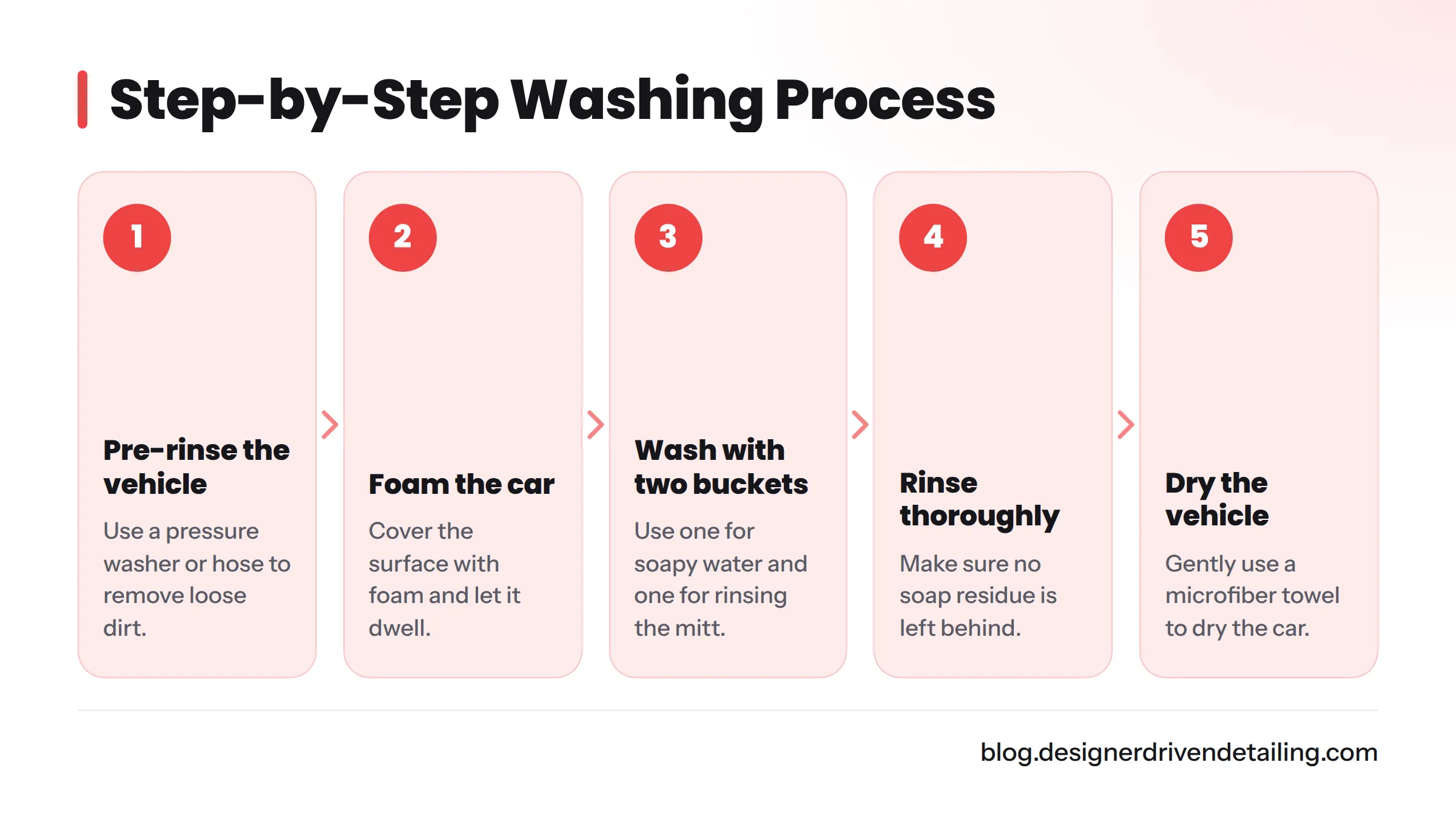
- Pre-rinse the vehicle: Use a pressure washer or hose to remove loose dirt and debris.
- Foam the car: If using a foam cannon, cover the entire surface and let it dwell for a few minutes.
- Wash using the two-bucket method:
- Bucket 1: Soapy water.
- Bucket 2: Clean water for rinsing the wash mitt.
- Start washing from the top down, frequently rinsing the mitt in the clean bucket.
- Rinse thoroughly: Ensure no soap residue is left behind.
- Dry the vehicle: Gently use a microfiber towel to dry the car, starting from the top.
Tips for Effective Drying
Proper drying helps avoid water spots:
- Use a blotting technique instead of wiping to prevent scratches.
- A drying aid spray can provide extra protection and enhance the gloss of the coating.
- Ensure all areas, including crevices and air intakes, are dried properly.
Common Mistakes to Avoid
Be mindful of these common pitfalls when washing your ceramic-coated vehicle:
- Using harsh soaps: Always opt for pH-neutral products.
- Washing in direct sunlight: This can cause soap to dry too quickly, leading to streaks.
- Using dirty equipment: Regularly clean your mitts and towels to avoid scratches.
- Skipping drying: Allowing water to air dry can lead to spots; always dry your vehicle completely.
FAQs
What soaps are best for ceramic coatings?
Answer: Use pH-neutral soaps designed specifically for ceramic coatings, such as Optimum No Rinse.
How often should I wash my ceramic-coated vehicle?
Answer: Aim to wash your car every two weeks to keep the coating effective.
Can I use any wash mitt on a ceramic-coated vehicle?
Answer: Select a soft microfiber wash mitt to prevent scratches and damage.
How does Florida's heat affect washing my car?
Answer: High temperatures can quickly dry soap, increasing the risk of spots and streaking. It's best to wash during early morning or late afternoon.
What is the two-bucket method?
Answer: This washing technique employs two separate buckets: one containing soapy water and the other for rinsing the mitt, helping to prevent dirt from contaminating the vehicle.
Conclusion
Washing a ceramic-coated vehicle requires attention to detail and the right techniques. Following a systematic approach not only preserves the protective coating but also keeps your car looking pristine. Always choose appropriate products and tools to ensure the longevity of your investment. For further insights, check out our Step-by-Step Ceramic Coating Installation Guide.